
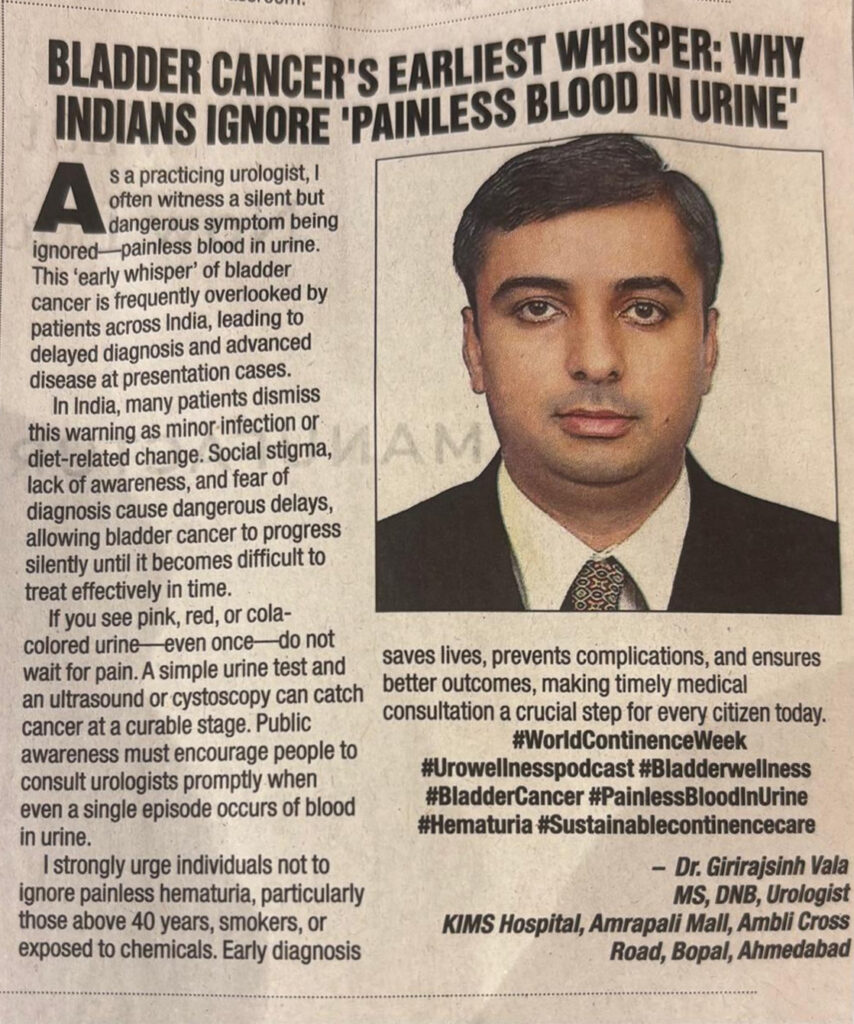
Bladder Cancer’s Earliest Whisper: Why Indians Ignore Painless Blood in Urine
A single drop of blood can sometimes tell a story we aren’t ready to hear. As a practicing urologist, I often witness a silent but dangerous symptom being ignored across India—painless blood in urine (Hematuria).
This “early whisper” of bladder cancer is frequently overlooked by patients, leading to delayed diagnosis and advanced disease at the time of presentation.
But why do we ignore such a critical warning sign? Let’s look at the underlying reasons and understand why immediate medical attention is necessary.
Why Do Indians Ignore This Silent Warning?
In India, health symptoms that don’t cause physical pain are often pushed to the back burner. When it comes to blood in the urine without any pain, patients frequently dismiss it due to a variety of reasons.
Misdiagnosis as Minor Issues
Many patients assume that painless blood in the urine is caused by a minor urinary infection, dehydration, or a temporary diet-related change, delaying proper medical evaluation.
Social Stigma
Discussions related to urinary and reproductive health are often avoided due to embarrassment or social hesitation, preventing many people from seeking timely medical advice.
Lack of Awareness
There is still a significant lack of awareness about painless hematuria and its possible connection to bladder cancer. Many individuals are unaware that even a single episode can be an important warning sign.
Fear of Diagnosis
Fear of discovering a serious illness often leads people to postpone medical consultation. Unfortunately, these delays may allow bladder cancer to progress silently until treatment becomes more challenging.
The Golden Rule: Do Not Wait for Pain
“If you see pink, red, or cola-colored urine—even once—do not wait for pain.”
Bladder cancer does not always present with painful symptoms. Even a single episode of blood in the urine should never be ignored and deserves prompt medical evaluation.
How Is Bladder Cancer Diagnosed?
Detecting bladder cancer at an early and curable stage often begins with simple diagnostic tests. Depending on the patient’s condition, your urologist may recommend:
• A simple urine test
• An ultrasound scan
• Cystoscopy
Public awareness plays a vital role in encouraging individuals to consult a urologist promptly, even if blood in the urine occurs only once.
Who Is Most At Risk?
Although bladder cancer can affect anyone, certain individuals are at a higher risk and should be especially vigilant.
• Individuals above 40 years of age
• Smokers
• People exposed to industrial chemicals
Conclusion: Early Diagnosis Saves Lives
Early diagnosis saves lives, prevents complications, and significantly improves treatment outcomes. Timely consultation with a qualified urologist is one of the most important steps toward protecting your health. If you or a loved one notices painless blood in the urine, don’t ignore the whisper before it becomes a roar.
About the Expert
Dr. Girirajsinh Vala
MS, DNB, Urologist
KIMS Hospital,
Amrapali Mall,
Ambli Cross Road,
Bopal, Ahmedabad.